
If you drive in Calgary, you already know winter is not one season. It is five or six of them squeezed into a few months. A cold snap in December, a chinook that melts everything in January, a snowstorm in March that makes you forget spring was ever coming. Your car goes through all of it, and it does not get a say.
This winter car care Calgary checklist is written for normal drivers, not car nerds. You do not need special gear or a free weekend. Most of it takes ten or fifteen minutes here and there, and a few jobs are best left to someone with the right tools. We have split it into the things to do before the cold arrives, the things to do during the winter, and the things to do when it starts to lift.
Why Calgary winters are hard on cars
Cold on its own is not the main problem. Cars are built to sit in the cold. What wears them down is the mix of cold, moisture and whatever the city puts on the road to keep traffic moving.
The City of Calgary spreads sand and de-icing material on roads during the winter. That material gets thrown up by tires and settles on the lower half of your car. It lands on the paint behind the wheels, on the door sills, in the wheel arches and along the bottom edge of the doors. When a chinook arrives and the snow melts, all of that gets wet and stays wet against the metal until the temperature drops again.
Then there is the cycle itself. Calgary can swing twenty degrees or more in a day when a chinook comes through. Water gets into small chips and cracks, freezes, expands and widens the flaw a little. Do that dozens of times and a tiny stone chip from October can look like a real problem by April. We go deeper on this in our post on chinook freeze-thaw damage and your car’s paint.
Inside the car, the story is simpler. Boots bring in snow, the snow melts into the carpet, and the moisture has nowhere to go. By midwinter many cars have a damp smell and pale, crusty marks across the floor. Those marks are the salts left behind when the water dries.
None of this is dramatic. It is slow and it builds up. That is the good news too, because small habits really do keep it under control.
Before the cold arrives: the fall checklist
The best time to prepare your car is on a mild day in October or early November, before the first real snowfall. Here is what is worth doing.
- Wash the car properly. Not a quick rinse. A proper wash that gets into the door jambs, the wheel arches and under the lower edges. Dirt left on the car when winter starts becomes a base layer that everything else sticks to.
- Look over the paint for chips. Walk around the car in good light. Check the hood, the front bumper, the mirrors and the lower doors, which take the most stone hits. A chip that goes through to bare metal is worth getting touched up before winter, because that is where rust gets in.
- Add some protection to the paint. A coat of wax or sealant gives the surface something slick to shed water and grime. Wax is easy and affordable, though it needs refreshing. If you want to compare your options, read our guide to car wax vs ceramic coating vs sealant.
- Put in good mats. Deep-tray rubber or all-weather mats are the cheapest and most effective thing you can do for the interior. They hold the melted snow and let you hose it out instead of letting it soak into the carpet.
- Check your wipers and washer fluid. Use a washer fluid rated for cold temperatures, and replace tired wiper blades before you need them on a dark morning.
- Clean the inside of the windshield. The film that builds up from the heater and from plastics breaking down makes fogging worse. A clean inside surface helps a lot.
- Check the headlights. Winter has long dark hours, and yellowed, hazy headlights cut how far you can see. If yours look cloudy, that is a safety issue, not just a cosmetic one. We cover options on our headlight restoration page.
If you would rather hand all of that to someone, our winter car protection service is built around exactly this list. We come to you, so you do not have to rearrange your day around it.
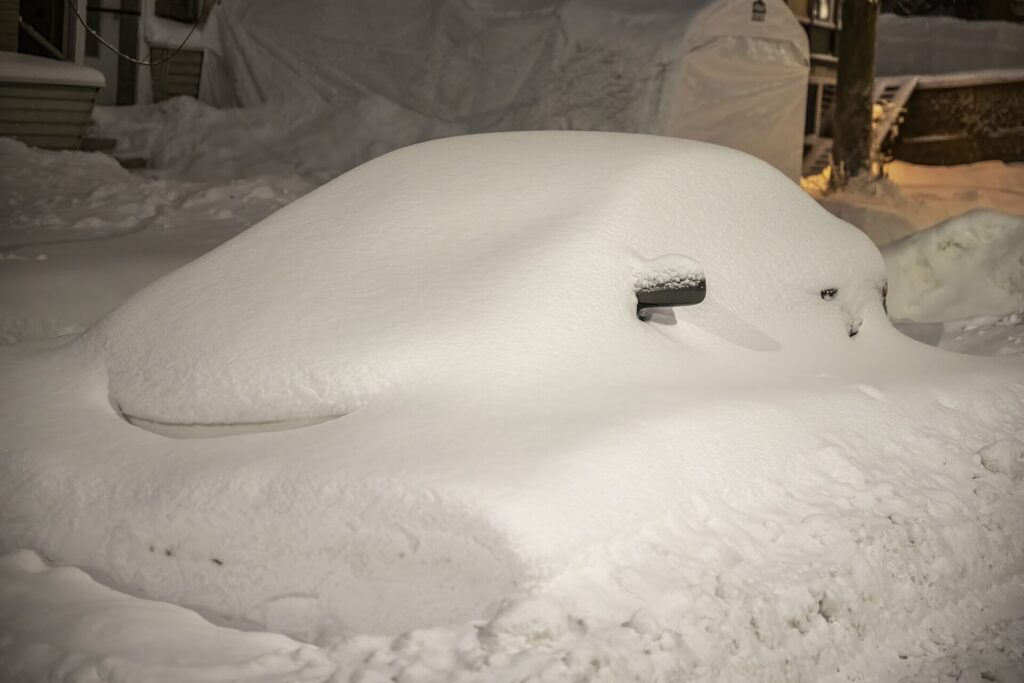
Interior: salt, slush and mats
The inside of the car is where most people lose the winter battle without noticing. Here is how to keep it under control.
Empty and rinse the mats weekly
If you have rubber mats, pull them out once a week when they are full of slush. Shake them, rinse them with a bucket or a hose on a mild day, and let them dry before you put them back. Put them back wet in a cold car and you have just made a small ice rink on the floor.
If you have carpeted mats, take them out and let them dry somewhere warm. Carpet mats are the first thing to hold salt, and once salt is in the fibres it keeps pulling moisture from the air.
Do not let the carpet stay wet
When there is a big melt, wet carpet underneath the mats is the real risk. Lift the mats and feel the carpet. If it is damp, run the heater on the floor setting for a while, open the doors on a dry day, or use a towel to soak up the surface water. A damp carpet that is never dried is how musty smells begin.
Vacuum the salt before it spreads
Dry salt can be vacuumed. Wet salt cannot, because it dissolves into the fibres. So vacuum when the carpet is dry and the white marks are still sitting on top. A stiff brush loosens the grains before you vacuum.
When the marks have already gone into the carpet, a vacuum alone will not lift them. That is a job for a proper extraction and shampoo, which is what our salt stain removal service does. The Gold package, at $250, includes shampooing the carpets, mats and seats for exactly this reason.
Wipe down hard surfaces
Slush on the door sill and on the plastic trim dries to a white film. A damp microfibre cloth removes it in seconds. Do this every week or two and it never builds up. Skip it for two months and you will be scrubbing.
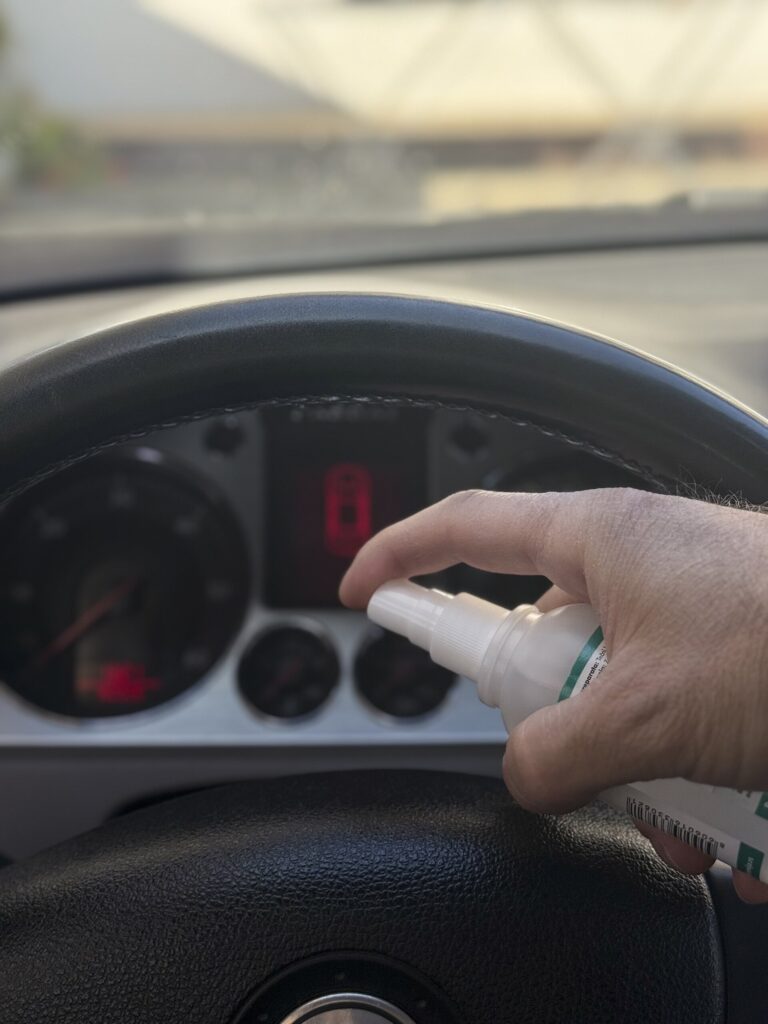
Treat the dashboard and vinyl
Heaters run hard in winter and the cabin air gets very dry. Vinyl and plastic can dry out and start to fade over time. A light, non-greasy vinyl protectant helps. Our Silver package, at $160, covers the vinyl protection along with the vacuum, wipe-down and headliner clean.
Exterior: washing in the cold
This is where a lot of well-meant advice goes wrong, so we will be careful.
You do want to wash salt and sand off the car during winter. Leaving it for weeks is what does the damage. But washing in freezing weather has its own risks, and the safest approach depends on the temperature.
- Use a car wash with an undercarriage spray when it is above freezing. Chinook days are perfect for this. The sand and salt on the underside and in the wheel arches are the hardest to reach at home, and the spray gets them.
- Avoid washing in deep cold unless you can dry the car right away. Water in door seals, locks and around the edges can freeze. A frozen door that will not open is a miserable way to start a morning.
- Dry the seals and edges. After any wash, wipe around the door and trunk seals with a towel. If your car has rubber seals that stick in the cold, a silicone-based seal protectant helps.
- Never pour hot water on a frozen windshield or frozen paint. The sudden change can crack glass.
- Do not scrape ice off the paint. Use a proper ice scraper only on glass. Let the defroster and warm-up time deal with the ice on the body.
Home washing in Calgary also raises the question of what happens to the runoff. If you wonder about that, we wrote a separate post on whether you can wash your car at home in Calgary, based on what the City says.
A word on mud and grit
Gravel roads and construction zones put a heavy layer of grit on the lower body. Grit is abrasive. If you wipe it off dry, you drag it across the paint and leave fine scratches. Always rinse first so the grit floats off, then wash with a clean mitt.
Paint protection options
Protection is the part of winter car care that people find confusing, so here is a simple way to think about it. The idea is to put a layer between the road and your paint. That layer takes the hit instead of the clear coat. Here is what each choice looks like in plain terms.
Wax. A natural or blended layer on top of the paint. It is affordable and makes the car shiny and slick. It wears off, so it needs doing a few times a year. Our Platinum package, at $330, includes a wax finish.
Paint sealant. A synthetic version of the same idea. It generally holds up longer than wax and has a more glassy look. Application is similar.
Ceramic coating. A harder, longer-term layer that bonds to the paint. It helps protect the surface and makes washing easier. It is more expensive, it needs the paint to be prepared properly, and it is not a force field. Rock chips still happen. If you want to understand the trade-offs honestly, read is ceramic coating worth it in Alberta.
Paint protection film. A clear film that is applied to the areas that take the most stone hits, such as the front bumper and hood. It is the only option on this list that is built to physically absorb impact. You can learn more on our paint protection page.
There is no single right answer. A newer car that you want to keep for a long time is a good candidate for a coating or film. An older car you plan to drive for another few years may be well served by a good wax and regular washing. What matters most is that the paint is clean when protection goes on, and that you keep up with washing afterward.
The mid-winter routine
Once winter is underway, the routine is simple. Think of it as a rhythm, not a project.
- Every week: shake out or rinse the mats, wipe the door sills, and check that the carpet is not holding water.
- Every two weeks: wash the car when the temperature allows, with an undercarriage rinse if you can get one.
- After a big chinook: do a thorough wash. A chinook melts everything, which means the whole car is wet with salty meltwater. Rinse it before it refreezes.
- Once a month: check tire pressure, because cold air lowers it, and look over the washer fluid and wipers.
- Whenever you see white salt lines on the paint or carpet: deal with them early. Fresh salt is far easier to remove than salt that has sat for six weeks.
Small and regular beats big and rare. A car that gets ten minutes of care every week looks very different in April from one that gets a two-hour panic in April.
What to do when winter lifts
When the long cold ends, most Calgary drivers want to do one thing: get the car clean. There is a sensible order, and it matters. Start with the underbody and wheel arches to remove salt and grit. Then do the interior floors, because they will be at their worst. Then look at the paint and the headlights, and finish with protection.
We lay that out step by step in our post-winter detailing guide and in the spring car cleanup checklist for Calgary. If you only read one thing after winter, make it the first of those.

When to book a detailer
You can do a lot yourself. But there are times when it makes sense to bring in a professional, and they tend to be the same few situations.
- Salt stains have gone deep into the carpet. Extraction and shampoo equipment does what a vacuum and a brush cannot.
- There is a smell that will not leave. Musty smells usually mean moisture is trapped somewhere. A proper interior clean, and sometimes an ozone treatment, handles it. Our car odor removal service explains what that involves.
- You want paint protection applied right. Protection works best on paint that has been washed, decontaminated and prepared. That is a bigger job than a driveway wash.
- You do not have the space, the water or the warm day. This is a very real thing in Calgary winters. A mobile detailer brings the equipment to your driveway or your workplace.
- You are short on time. A detail that takes us a few hours might take you most of a weekend.
If that sounds like you, take a look at our interior detailing options, or see how prices work on our pricing page. Silver is $160, Gold is $250 and Platinum is $330, and each package builds on the one before it.
A short printable version
If you want the whole thing on one screen, here it is.
Before winter
- Full wash, including door jambs and wheel arches
- Check paint for chips and get them touched up
- Wax, sealant or another form of paint protection
- Rubber or all-weather mats
- Cold-rated washer fluid and good wipers
- Clean the inside of the windshield
- Check the headlights
During winter
- Rinse mats weekly and wipe door sills
- Make sure the carpet underneath is not holding water
- Wash with an undercarriage rinse when above freezing
- Dry the door and trunk seals after washing
- Do a full wash after any big chinook
After winter
- Underbody and wheel arches first
- Interior floors and salt stains next
- Paint check and headlight check
- Reapply protection
Frequently asked questions
How often should I wash my car in a Calgary winter?
A good rule is every two weeks when the temperature allows, and always after a big melt. The point is not to keep the car spotless. It is to keep salt and sand from sitting on the paint for long stretches. If it is too cold to wash safely, wait for the next mild day.
Is it okay to run a car through an automatic wash in winter?
Yes, if the temperature is above freezing or you can dry the seals afterward. The undercarriage spray is the real benefit. After the wash, drive for a few minutes and wipe around the doors so the seals do not freeze shut.
Do rubber mats really make a difference?
They do. They hold melted snow in a tray so it does not soak into the carpet. They are also easy to rinse. Of all the winter car care steps, rubber mats are probably the best value for the money.
Can I wax my car in the cold?
Most waxes and sealants need the paint to be at a moderate temperature and dry. That usually means a garage or a mild day. If you cannot do it at home, a mobile detailer can often help when there is a break in the weather.
Will winter ruin my car’s paint?
Not by itself. Paint is made to last. What causes problems is a build-up of salt and grit that is never washed off, combined with chips that let moisture reach the metal. Regular washing and some protection keep the risk low.
Final thoughts
Winter car care in Calgary does not need to be complicated. Wash off salt before it settles. Keep the carpets dry. Put something between your paint and the road. Fix chips early. Deal with the interior as it happens instead of in April.
If you would like help with any part of it, Natu Auto Detailing comes to you anywhere in Calgary and nearby. Call (403) 903-8377 and tell us about your car, and we will suggest what makes sense. You can also look through our full list of services to see what we offer.
Photo credits are shown under each image. All images are used under their open licences from Wikimedia Commons.